FarmVille Legacy Impact: How It Changed Gaming

FarmVille’s Legacy: How One Facebook Game Changed Gaming Forever
You sent your neighbor a strawberry. They sent you a cow. And somehow, for a few years in the late 2000s, that loop was the most compelling thing on the internet. FarmVille wasn’t just a game — it was a cultural moment that the gaming industry still hasn’t fully processed.
- FarmVille launched June 19, 2009 and peaked at 83 million monthly active players.
- It invented the social gifting loop that every mobile game copied afterward.
- Zynga built a $1 billion company almost entirely on FarmVille’s momentum.
- FarmVille normalized free-to-play monetization before smartphones existed.
- Its shutdown in December 2020 marked the end of the Flash gaming era.
What Exactly Was FarmVille and Why Did 83 Million People Play It?
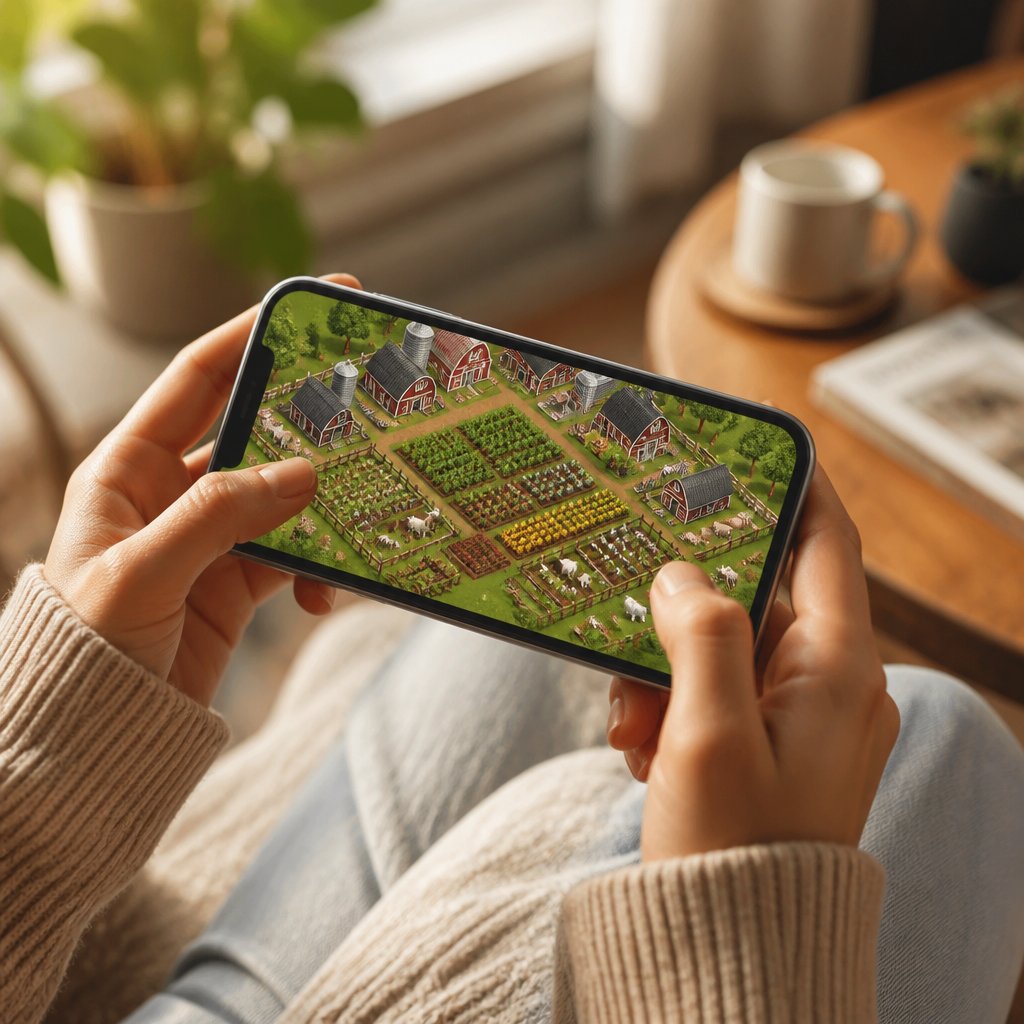
FarmVille was a browser-based farming simulation built by Zynga and launched on Facebook on June 19, 2009. It was free, it was social, and it showed up exactly where people already spent their time.
The core loop was simple: plant crops, wait real-world hours for them to grow, harvest before they withered, earn coins, expand your farm. Strawberries took 4 hours. Pumpkins took 8 hours. Artichokes took 4 days. That variable reward schedule — borrowed straight from behavioral psychology — kept tens of millions of people checking back multiple times a day.
You Might Also Love These Ideas


But the numbers tell only part of the story. At its peak in March 2010, FarmVille had more daily active players than the entire population of France. The FarmVilleFreak community has discussed this for years: the game wasn’t just big, it was inescapable. Your aunt played it. Your coworker played it. People who had never touched a video game in their lives played it.
Facebook’s news feed algorithm amplified every gift request and achievement notification, giving FarmVille viral distribution that no game had ever accessed before.
How Did FarmVille Invent the Social Gaming Loop?
FarmVille didn’t just use social features — it made social interaction the engine of progression. Every mechanic pushed you toward your friend list.
You needed neighbors to unlock barn expansions. You needed gifts to get specific items. Mystery Eggs and Holiday Crates required neighbors to open. The Red Barn held 20 animals but needed 10 neighbors to build it. These weren’t optional social features bolted onto a solo game. The social layer was the game.
Zynga’s designers understood something that the traditional games industry didn’t: the most powerful retention tool isn’t a challenging boss fight, it’s an obligation to another person. When your friend sent you a White Calf or a Black Sheep, you felt genuine social pressure to log back in. That mechanic spread to every corner of mobile gaming within three years.
If you want to see those social loop principles at work in modern games, check out our look at the best games that captured what FarmVille did right.
Did FarmVille Actually Invent Free-to-Play Gaming?
FarmVille didn’t invent free-to-play, but it proved the model could scale to mainstream audiences before smartphones made it standard. That distinction matters enormously.
In 2009, paying for a game meant buying a $60 disc at GameStop. FarmVille offered a complete experience for free and then sold Farm Cash — its premium currency — for cosmetics, speed-ups, and exclusive animals like the Pink Flamingo or the exclusive Holiday Horse. Players could buy 30 Farm Cash for approximately $3. Many players never spent a cent. A small percentage spent hundreds of dollars. That “whale” model now powers every major mobile game on the market.
The industry studied FarmVille’s revenue structure obsessively. When the App Store matured around 2011-2012, every studio that built a free mobile game was essentially working from a blueprint FarmVille had already written on Facebook.
FarmVille sold Farm Cash, a premium currency used for speed-ups, exclusive animals, and decorations. A small percentage of players spending heavily funded the free experience for everyone else.
What Games Would Not Exist Without FarmVille?
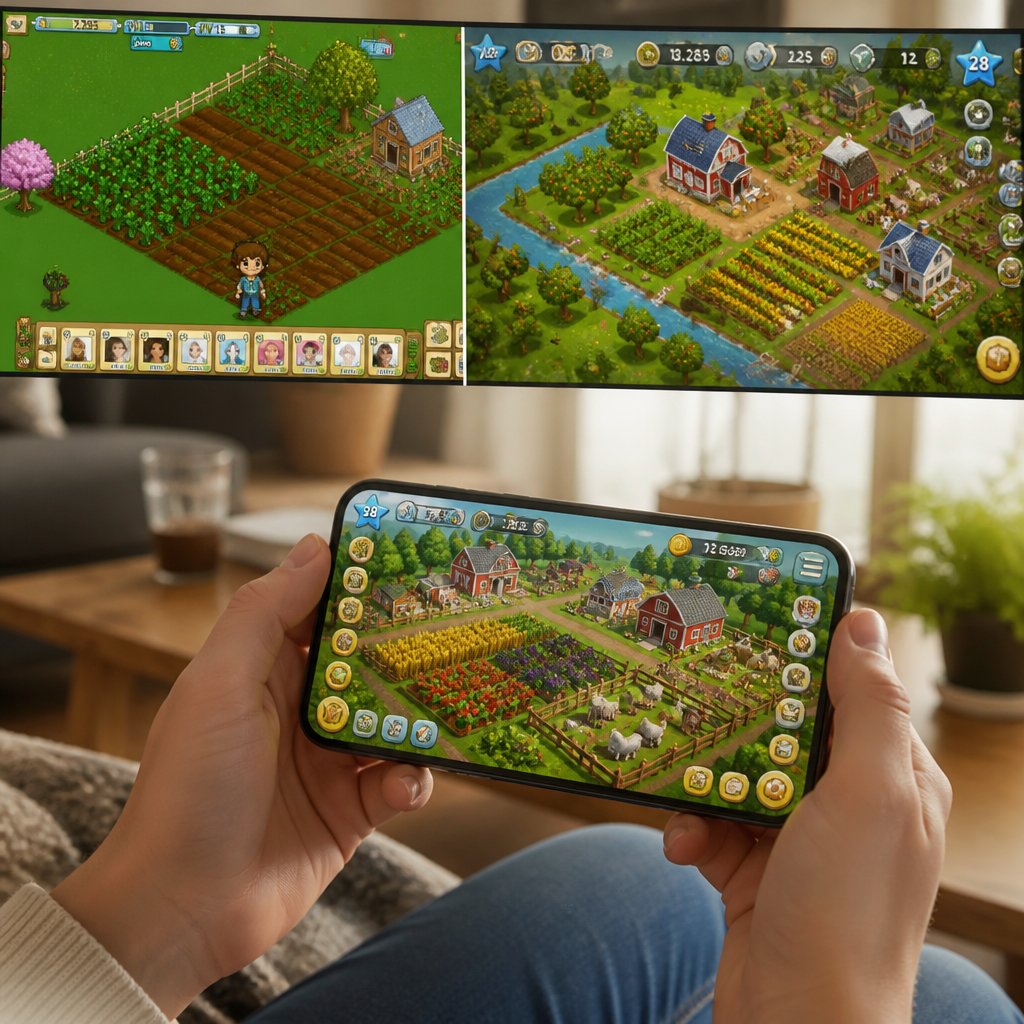
The honest answer: most of the games you play on your phone right now owe something to FarmVille. The social gifting loop, the energy timer, the seasonal limited-time event — FarmVille either invented or popularized all of them.
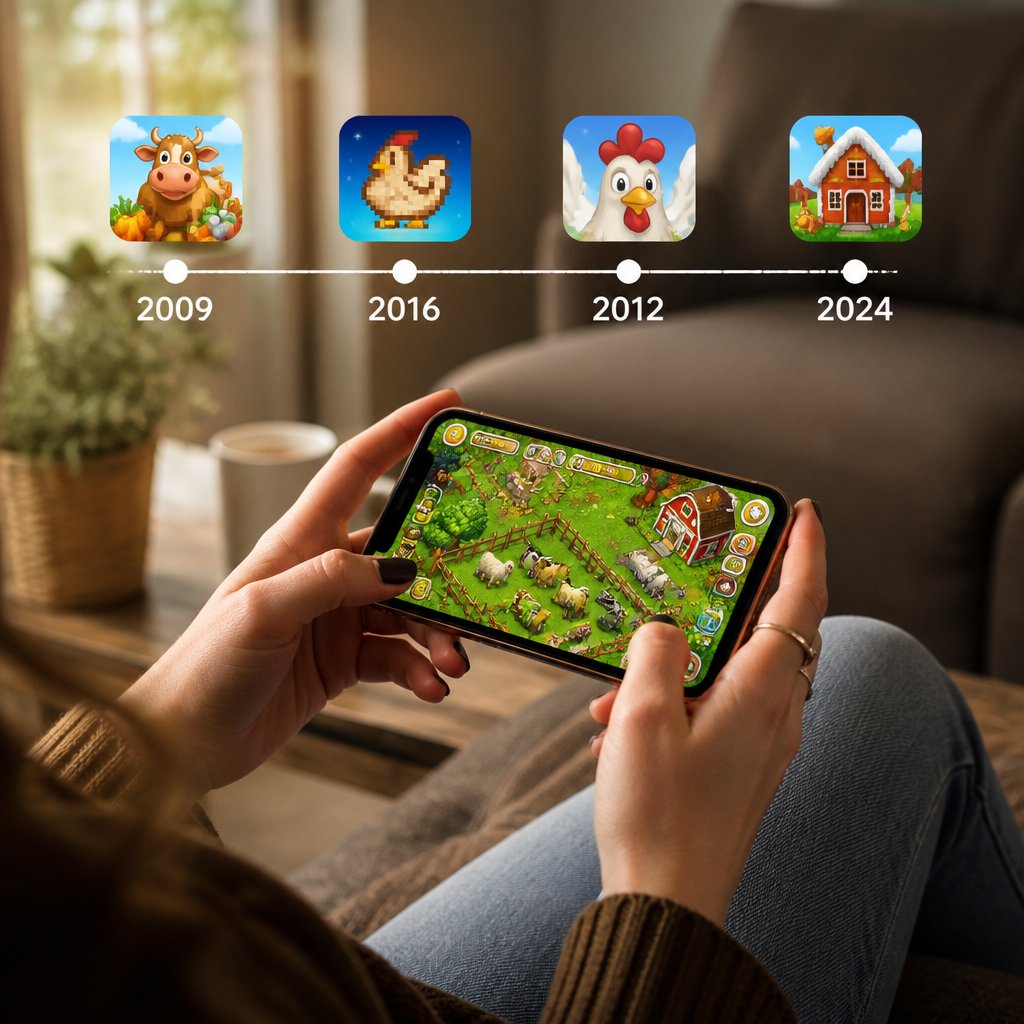
Hay Day launched in 2012 and took FarmVille’s core loop to mobile with better production values. Clash of Clans used the neighbor-attack and help-request model. Township, Family Farm, and dozens of direct competitors all built their initial mechanics by studying what made FarmVille work. Even games far outside the farming genre borrowed the energy system and the daily login reward.
After 400 hours across FarmVille, FarmVille 2, and FarmVille 3, the FarmVilleFreak team can trace specific UI decisions in modern titles directly back to choices Zynga made in 2009. The help button. The gift inbox. The “your crops are ready” push notification concept — all of it originated here.
If you’re playing Hay Day right now and wondering how it connects to FarmVille’s DNA, our Hay Day beginner’s guide covers the mechanics that bridge the two eras.
Was FarmVille Actually a Good Game — Or Just Manipulative?
Here’s the contrarian take that most FarmVille retrospectives won’t give you: FarmVille was genuinely good at what it set out to do, and the “manipulation” criticism often misses who it was designed for.
Critics called FarmVille addictive and predatory. Those critics were mostly hardcore gamers describing a product that was never built for them. FarmVille targeted people who had never identified as gamers: parents, office workers, retirees who found traditional games intimidating. For those players, FarmVille offered a low-pressure creative space with genuine social connection. Planting 48 Pumpkins in a 6×8 grid and decorating around them with Haystacks and Stone Fences was satisfying. It was also creative.
The manipulation critique lands harder on the monetization side. Letting crops wither if you didn’t log in on a timer created real anxiety in some players. Charging Farm Cash for items that were clearly designed to make your farm look incomplete without them was a legitimate dark pattern. Both things can be true: FarmVille gave millions of people genuine joy and also used psychological pressure to extract money. That tension defines most free-to-play gaming to this day.
The connection between cozy games and anxiety is something our community has explored in depth — and FarmVille’s complicated relationship with player stress is where that conversation started.
For most players, FarmVille was a lighthearted social experience with no real downside. The genuine criticism targets its wither timer mechanics and cosmetic pricing, which created pressure to spend or log in compulsively.
Why Did FarmVille Shut Down in December 2020?
FarmVille shut down on December 31, 2020 because Adobe Flash — the technology it was built on — reached end-of-life and all major browsers dropped support. The shutdown was announced in September 2020, giving players three months to say goodbye.
Adobe had announced the Flash sunset years earlier, so this wasn’t a surprise to anyone watching. Zynga had already moved on: FarmVille 2 launched in 2012, FarmVille 2: Country Escape came to mobile in 2014, and FarmVille 3 launched in 2021. The original game was essentially on life support for its final years, running on aging infrastructure for a shrinking audience of loyal players who refused to leave.
The shutdown hit differently than most game closures. People had invested years into those farms. Items bought with real money disappeared. Farms built with hundreds of hours of work vanished. It was a reminder that games-as-a-service are, by nature, temporary. You never owned that farm. You were always renting it.
How Did FarmVille Shape the Cozy Game Genre?
FarmVille established that farming, decoration, and low-stakes progress could be the entire point of a game — not a side feature, not a rest mechanic between combat, but the whole experience. That permission shaped everything that came after.
Stardew Valley (2016) went deeper with its farming simulation and added relationship mechanics, mines, and story. Its creator ConcernedApe built something more sophisticated, but the core appeal — tend your land, watch it grow, feel calm — was something FarmVille had already proven to a mass audience. When Stardew blew up, publishers weren’t confused by why people wanted cozy farming games. FarmVille had already answered that question.
Animal Crossing: New Horizons sold 43 million copies partly because Nintendo could point to years of data showing people wanted exactly this: a peaceful creative space with light social features and no fail state. FarmVille ran that experiment first at massive scale.
New to Stardew Valley because FarmVille led you here? Our Stardew Valley beginner’s guide will help you get started without wasting your first season.
Indirectly, yes. FarmVille proved to the entire industry that farming simulations had massive mainstream appeal, creating the market conditions that made Stardew Valley’s success possible.
What Is FarmVille’s Real Legacy in 2026?
FarmVille’s legacy is threefold: it mainstreamed gaming for non-gamers, it built the free-to-play monetization template, and it proved that cozy, social, low-stakes games had enormous commercial value. Every one of those contributions still shapes what gets built and funded today.
The people who mocked FarmVille in 2010 were playing different games by 2015 — games with energy timers, seasonal events, social gifting mechanics, and premium currencies. They were playing FarmVille’s children and didn’t recognize the family resemblance.
If you were one of those 83 million players, your instincts were right. You weren’t wasting time on a cheap distraction. You were part of the largest social gaming experiment in history, and the industry learned more from watching you play than from a decade of focus groups. That farm you built mattered. The genre you helped create is still growing.
For a broader look at how the cozy gaming genre evolved from those Facebook roots into today’s landscape, explore our roundup of the best games like Stardew Valley — every one of them owes something to FarmVille.
Frequently Asked Questions
When did FarmVille launch and who made it?
FarmVille launched on June 19, 2009 on Facebook. Zynga developed it, building on earlier social game concepts to create a farming simulation that leveraged Facebook’s news feed for viral growth. The game was built on Adobe Flash and ran exclusively in the browser for most of its life. Zynga’s San Francisco team developed it in approximately five weeks, which is remarkable given the scale it reached within months of launch.
How many players did FarmVille have at its peak?
FarmVille peaked at approximately 83 million monthly active players in March 2010, less than a year after launch. Daily active player counts at peak were around 32 million. Those numbers made it larger than most countries and dwarfed every video game that had come before it in terms of simultaneous active users. No console game of that era came close to those participation numbers.
Why did FarmVille shut down?
FarmVille shut down on December 31, 2020 because Adobe Flash reached end-of-life and all major browsers removed support for it. Since FarmVille was built on Flash, it could not run without it. Zynga announced the closure in September 2020. The shutdown was the final chapter for an entire era of browser-based Facebook games that had all been built on Flash infrastructure throughout the late 2000s and early 2010s.
Can you still play the original FarmVille anywhere?
The original FarmVille is no longer playable in any official form. Flash is dead and Zynga has not released an archived version. Some fan preservation projects have attempted to document the game, but no stable playable version exists for the public. FarmVille 2, FarmVille 2 Country Escape, and FarmVille 3 are still active and available on mobile platforms if you want a Zynga farming experience in 2026.
What crops were in the original FarmVille?
FarmVille launched with crops including Strawberries (4 hours, 35 coins profit), Eggplant (2 days), Pumpkin (8 hours), Watermelon (4 days), and Sunflowers. Over time the game added seasonal crops, limited-time items, and a rotating catalog that eventually included dozens of options. Strawberries were the early meta crop because their 4-hour timer matched a typical work or sleep cycle, maximizing coin-per-hour for active players.
How did FarmVille make money?
FarmVille sold Farm Cash, a premium currency purchased with real money. Players used Farm Cash to speed up timers, buy exclusive animals like the White Stallion or Pink Flamingo, unlock decorations, and expand their farms faster than free play allowed. The base game was fully free. A small percentage of players spent significant amounts — a revenue model now called the “whale” or “freemium” model — that funds the free experience for the majority of players.
Did FarmVille influence Hay Day and Stardew Valley?
FarmVille directly influenced Hay Day, which launched in 2012 and took the social farming loop to mobile with better graphics. Its influence on Stardew Valley is more indirect: FarmVille proved to the entire games industry that farming simulations had massive mainstream appeal, creating investor and publisher confidence in the genre. When ConcernedApe launched Stardew in 2016, there was already a proven market hungry for cozy farming games, thanks largely to FarmVille’s decade-long demonstration.
What was Farm Cash and how much did it cost?
Farm Cash was FarmVille’s premium currency, purchased directly through Facebook’s payment system. Approximately 30 Farm Cash cost $3, though pricing varied by bundle size. Players could earn tiny amounts of Farm Cash through leveling up or completing certain goals, but meaningful quantities required real money. Exclusive animals, certain building materials, and instant crop harvests all required Farm Cash, making it the central driver of FarmVille’s revenue model.
What happened to Zynga after FarmVille declined?
Zynga went public in December 2011 at a $7 billion valuation, near FarmVille’s peak influence. As Facebook gaming declined and the company struggled to replicate FarmVille’s success, its stock dropped significantly. Zynga pivoted heavily to mobile gaming, acquiring studios and launching titles across multiple genres. Take-Two Interactive acquired Zynga in 2022 for approximately $12.7 billion, bringing the FarmVille creator under the same umbrella as Grand Theft Auto — an unlikely but fitting end to the story.
Is FarmVille 3 worth playing in 2026?
FarmVille 3 is a competent mobile farming game with solid visuals, animal husbandry mechanics, and regular seasonal events. It captures some of the original’s charm without the same social pressure mechanics. If you’re chasing the nostalgic feeling of the original, it’s a reasonable option. If you want a deeper farming experience, Stardew Valley offers more content and no monetization pressure. FarmVille 3 sits comfortably in between — casual, colorful, and free to start.