History of FarmVille: From 83 Million Players to Shutdown

You planted your first strawberry crop in 2009 and suddenly lost three hours of your life. If that sounds familiar, you were part of something genuinely massive — the most-played Facebook game in history.
FarmVille wasn’t just a game. It was a cultural moment that dragged your aunt, your coworker, and your high school best friend onto Facebook at the same time. Here’s everything that happened, start to finish.
- FarmVille launched on Facebook in June 2009, developed by Zynga.
- Peak player count hit 83 million monthly active users in March 2010.
- The game ran for over 11 years before shutting down December 31, 2020.
- Flash Player’s end-of-life forced the shutdown — not player count alone.
- FarmVille 2 and FarmVille 3 continued after the original closed.
When Did FarmVille Launch and Who Made It?
FarmVille launched on Facebook on June 19, 2009, built by Zynga — a San Francisco company founded by Mark Pincus just two years earlier. The development cycle was shockingly short: the team shipped the game in roughly six weeks. Zynga had already found traction with Texas HoldEm Poker on Facebook, but FarmVille was the bet that changed everything.
You Might Also Love These Ideas


The concept wasn’t original in the strictest sense. Games like farming simulators had existed for years on PC. But FarmVille put the genre directly inside a social network where 300 million people already spent their days. That was the whole trick.
How Did FarmVille Grow So Fast in 2009 and 2010?
FarmVille grew to 10 million players in its first six weeks — faster than any Facebook app before it. By March 2010, it peaked at 83 million monthly active users, which remains a staggering number even by 2026 standards. Three mechanics drove that growth loop.
First, the wall-post system. Every time you harvested a Mystery Box or found a lonely Black Sheep, FarmVille encouraged you to post it to your Facebook timeline. Your friends saw it. They clicked. They started farms. The game essentially turned every player into a free advertisement.
Second, the gifting system. You could send free items — bushels, fuel, building materials — to neighbors. Receiving a gift pulled you back into the game daily. Zynga understood retention through social obligation before anyone else in the industry had named that mechanic.
Third, energy and time gates. Crops like Strawberries harvested in 4 hours. Pumpkins took 8 hours. Artichokes took 4 days. The game trained you to check back on a schedule, the same way a slot machine trains behavior through variable reward intervals.
The FarmVilleFreak community has discussed this era for over fifteen years. The consensus: that gifting wall was both the game’s genius and its eventual villain.
New to the franchise? Read our FarmVille 3 beginners guide to see how the series evolved
What Was Playing FarmVille Actually Like at Its Peak?
At peak, a serious FarmVille player managed dozens of crop types, maintained neighbor relationships, and spent real money on Farm Cash — the premium currency. The base currency was Farm Coins, earned by harvesting. Farm Cash required real dollars or grinding specific tasks.
Key crops by profit margin in the original FarmVille: Strawberries returned 35 Coins profit per plot on a 4-hour timer. Artichokes returned 68 Coins on a 4-day timer. Blueberries gave 91 Coins on an 8-hour cycle and became the efficiency meta for mid-game players. The dedicated players — and there were millions of them — optimized every tile.
Animals added passive income. Chickens produced Mystery Eggs every two days. Cows produced Milk. The Black Angus Cow, obtainable only through the market for 20 Farm Cash or as a rare gift, became one of the most-wanted items in the game’s early era. Truffles from pigs sold for 500 Coins each, making pig ownership a genuine investment decision.
Decorating mattered socially. Your farm’s appearance affected your neighbor visits and therefore your coin income. The competitive decorating culture spawned hundreds of fan sites — including this one, which launched in 2009 specifically to cover FarmVille strategies.
Was FarmVille’s Success Actually a Good Thing? (The Contrarian Take)
Here’s the opinion most nostalgic retrospectives skip: FarmVille was also genuinely predatory, and that matters when telling the complete history.
The spam problem became so severe by late 2009 that Facebook changed its notification API specifically because FarmVille was overwhelming users who had never played. People quit Facebook temporarily because FarmVille wall posts from their friends were inescapable. That’s not charming nostalgia — it was a product designed to exploit social graphs.
The Farm Cash model targeted the same impulse that fuels modern loot boxes. Limited-time animals like the Pink Flamingo or the exclusive Holiday Penguin disappeared after 72 hours. Players with spending habits already formed by social obligation clicked Buy without pausing. Zynga’s revenue in 2012 hit approximately $1.28 billion, and a significant share came from a small percentage of high-spending players — what the industry now calls whales.
The FarmVilleFreak community debated this honestly back then. Many of us spent more on Farm Cash than we’d admit. Looking back, the monetization design was ahead of its time — which is another way of saying it pioneered mechanics that regulators are still arguing about in 2026.
This doesn’t erase the genuine joy millions of people got from the game. It just makes the full history more honest.
How cozy farming games genuinely help with stress and anxiety — the research-backed version
When Did FarmVille Start Declining and Why?
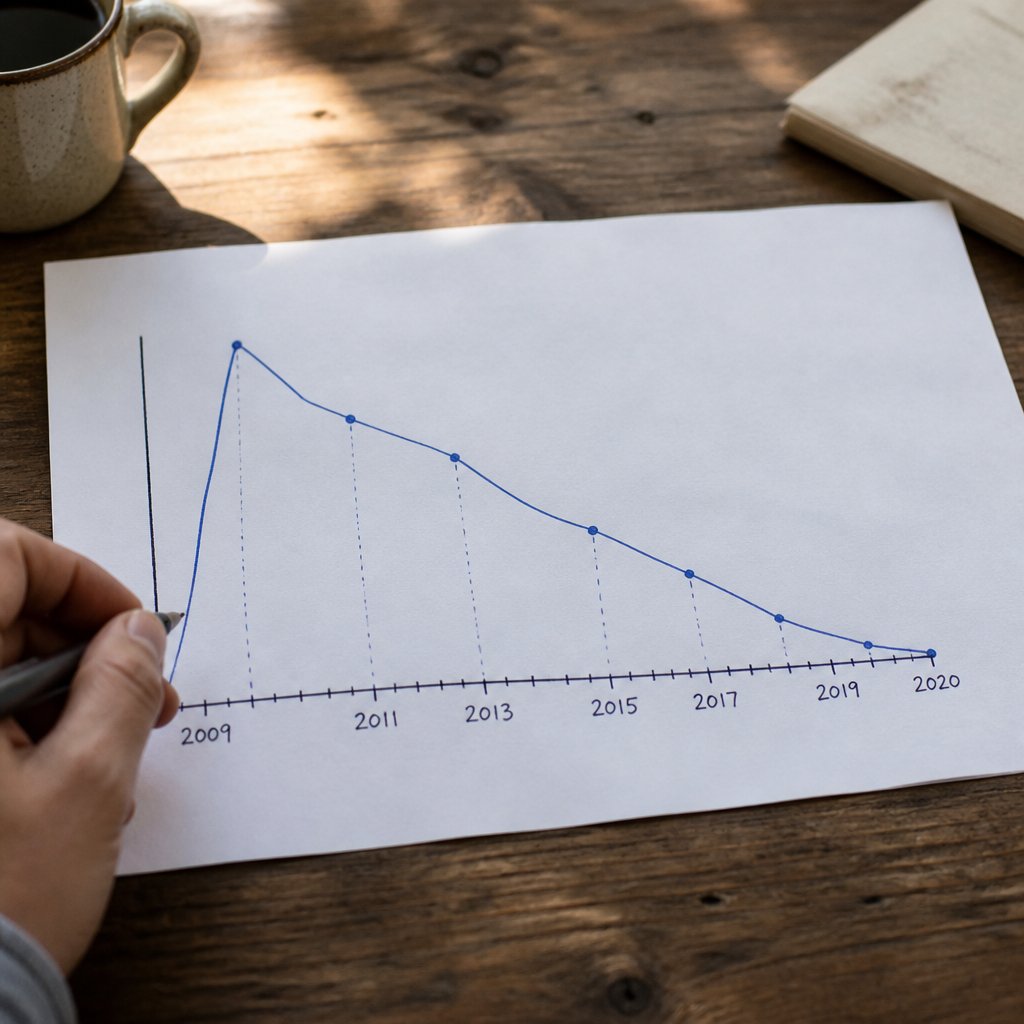
FarmVille’s player count started dropping in late 2010, and three forces drove that decline simultaneously. Facebook changed its notification and sharing APIs to reduce spam, which directly cut off FarmVille’s primary viral acquisition engine. Mobile gaming exploded — the iPhone 4 launched in June 2010 — and FarmVille ran only on desktop via Flash. And players simply burned out after 18 months of daily check-ins.
By 2012, monthly active users had fallen from 83 million to under 30 million. Zynga launched FarmVille 2 in September 2012, built in WebGL to run on mobile browsers, with 3D graphics and a new water-and-resource management system. It attracted new players but never recaptured the original’s viral moment. The social context of 2009 — when Facebook itself was still exciting — couldn’t be recreated.
What Happened When Adobe Killed Flash in 2020?
Adobe announced in 2017 that Flash Player would reach end-of-life on December 31, 2020. Since FarmVille’s original version ran entirely on Flash, that announcement set a hard death date for the game. Zynga confirmed in September 2020 that FarmVille on Facebook would shut down on December 31, 2020.
The shutdown triggered a genuine wave of grief across social media. Players logged in to take final screenshots. Fan communities — including our own FarmVilleFreak forums — lit up with goodbye posts, crop-planting ceremonies, and shared memories. On December 31, 2020, at 11:59 PM Pacific time, FarmVille went dark. Eleven and a half years after launch.
Zynga did not offer any save-your-progress option or memorial archive. Your farm, your animals, your carefully decorated homestead — all of it gone. That loss was real for people who had tended those farms for a decade.
What Came After — Did FarmVille Actually Die?
FarmVille the Flash game died. The franchise did not. Zynga continued operating FarmVille 2: Country Escape on mobile, which had launched in 2014 and remains active as of 2026 on iOS and Android. FarmVille 3 launched in November 2021 on mobile with improved 3D graphics, seasonal events, and a live-service model built around limited-time collections.
Neither sequel matched the original’s cultural footprint. The social layer that made FarmVille extraordinary was Facebook in 2009 — that specific combination of a new platform, a mainstream audience discovering social networking, and a simple game that made posting to your wall feel rewarding. That moment existed once.
How Does FarmVille’s Legacy Hold Up Against Modern Farming Games?
After tracking farming games on this site since 2009, the honest assessment is that FarmVille’s core loop — plant, wait, harvest, expand — was always thin compared to what came after. games like Stardew Valley offer story, character relationships, mining, fishing, and seasonal events that make FarmVille feel skeletal in comparison.
But FarmVille did something those games haven’t: it brought farming games to people who had never considered playing a video game. Your grandmother wasn’t going to load up Harvest Moon on a Super Nintendo. She absolutely did log into Facebook and plant some Pumpkins because her neighbor sent her a free seed. That democratization of gaming was real, and it permanently expanded who considers themselves a gamer.
The mechanics FarmVille popularized — daily login rewards, social gifting, time-gated progression, limited-time seasonal items — appear in virtually every mobile game released today. That’s an enormous legacy for a game built in six weeks in 2009.

Frequently Asked Questions
When did FarmVille launch on Facebook?
FarmVille launched on Facebook on June 19, 2009. Zynga built the game in approximately six weeks, launching it into a Facebook ecosystem that already had around 300 million registered users. The timing was perfect — Facebook had just reached mainstream adoption beyond college campuses, and FarmVille became one of the first applications to fully exploit the platform’s social graph for viral growth.
What was FarmVille’s peak player count?
FarmVille reached 83 million monthly active users in March 2010, roughly nine months after launch. That figure made it the most-played game on Facebook and one of the most-played online games in history at that point. For context, World of Warcraft peaked at approximately 12 million subscribers. FarmVille’s numbers reflected a fundamentally different distribution model built on a social network rather than traditional game marketing.
Why did FarmVille shut down?
FarmVille shut down on December 31, 2020, because Adobe ended support for Flash Player on that same date. The original game was built entirely in Flash and could not run without it. Zynga announced the shutdown in September 2020, giving players roughly three months notice. No port or archive was created. The end-of-life for Flash was announced by Adobe in 2017, so Zynga had years to plan — they chose not to rebuild the original game.
Who owned FarmVille — was it Facebook or Zynga?
Zynga owned and operated FarmVille. Facebook was the platform host, not the developer. Zynga paid Facebook a share of revenue generated through Facebook Credits (the platform’s payment system) and operated the game as a third-party developer under Facebook’s API terms. This distinction mattered legally and commercially — when Facebook changed its APIs to reduce spam, Zynga had no authority to override those decisions, which directly damaged FarmVille’s growth engine.
Can I still play the original FarmVille anywhere?
No official version of the original FarmVille exists anywhere as of 2026. Flash Player is discontinued and no longer supported by any major browser. Zynga did not release a port, an archive, or a preservation version. Some preservation projects exist in the fan community using Flash emulators like Ruffle, but no officially sanctioned way to play the original 2009 game exists. FarmVille 2: Country Escape and FarmVille 3 are active on mobile.
How did FarmVille make money?
FarmVille used a free-to-play model with two currencies: Farm Coins earned through gameplay and Farm Cash purchased with real money. Farm Cash unlocked premium items, accelerated timers, and provided access to limited-edition animals and decorations unavailable through regular play. Zynga also sold Facebook Credits directly. The company generated approximately $1.28 billion in total revenue in 2012, with FarmVille and its sequels as the primary drivers during that period.
What were the most valuable or rare items in FarmVille?
The Black Angus Cow was one of the earliest prestige items, available for 20 Farm Cash or as a rare gift from neighbors. Holiday-exclusive animals like the Holiday Penguin and Pink Flamingo appeared for 48-72 hour windows and became community status symbols. Truffle-producing pigs were considered strong investments at 500 Coins per truffle. The White Stallion horse, available briefly in 2010, became one of the most-discussed rare items in early FarmVilleFreak community threads.
Did FarmVille influence modern mobile games?
FarmVille directly influenced almost every mobile farming and casual game released after 2010. Daily login rewards, social gifting systems, time-gated crop mechanics, limited-time seasonal events, and premium currency layered on top of a free base game all trace lineage to FarmVille’s design. Games like Hay Day, Township, and dozens of others borrowed these structures explicitly. Even non-farming mobile games adopted the energy system and daily-reward loop that FarmVille proved effective at driving retention.
What is FarmVille 3 and how does it compare to the original?
FarmVille 3 launched in November 2021 on iOS and Android. It features 3D graphics, animal husbandry as a core mechanic, seasonal collections, and a live-service event calendar. The social elements are present but reduced compared to the original — you interact with friends through cooperative events rather than wall posts and gifting. Most longtime FarmVille fans find it polished but missing the chaotic social energy that made the original special. It is a competent mobile farming game rather than a cultural phenomenon.
Where did FarmVilleFreak.com come from and why does it still exist?
FarmVilleFreak.com launched in 2009 specifically to cover FarmVille strategies, item guides, and community news at a time when the game had no official documentation. At peak the site served millions of monthly readers seeking crop efficiency guides, mystery gift lists, and achievement walkthroughs. After FarmVille’s shutdown, the site expanded to cover all cozy farming and life-simulation games — Stardew Valley, Animal Crossing, Hay Day, Palia, and more — carrying the same player-first approach that started with a Flash game on Facebook.