FarmVille 3 Beginner’s Guide: Start Strong in 2026

You downloaded FarmVille 3, tapped through the tutorial, and now you’re staring at a farm that looks nothing like the ones on YouTube. The interface is cluttered, your coins are already gone, and someone just asked you to join their co-op. Breathe. This guide fixes all of that.
- Focus on wheat and corn early — they give the best energy-to-coin ratio.
- Always keep your barn animals fed; they produce passively while you’re offline.
- Don’t spend Farm Bucks on speeding up crops — save them for expansion permits.
- Complete the main story tasks first; they unlock key buildings faster.
- Join a neighborhood (co-op) before level 10 to access bonus rewards.
What Should You Actually Do First in FarmVille 3?
Follow the orange task arrows in the bottom-left corner — every single one. Those story tasks are the fastest path to unlocking the buildings that actually matter: the Barn, the Animal Pen, and the Silo.
The game wants you to scatter your energy everywhere in the opening hour. Don’t. Plant wheat in every available plot, collect from your one starter chicken, and bank every coin. Your Silo needs to hit level 2 before you can store enough feed to keep animals producing overnight. That single upgrade changes your entire income curve.
You Might Also Love These Ideas


After 300+ hours in FarmVille 3, the biggest mistake we see new players make is spending their first 20 Farm Bucks on a decorative fence. Those Farm Bucks are worth real money. Guard them.
Upgrade the Silo to level 2 first. It increases your feed storage capacity, which lets your animals produce goods overnight without running empty.
Which Crops Make the Most Coins for Beginners?
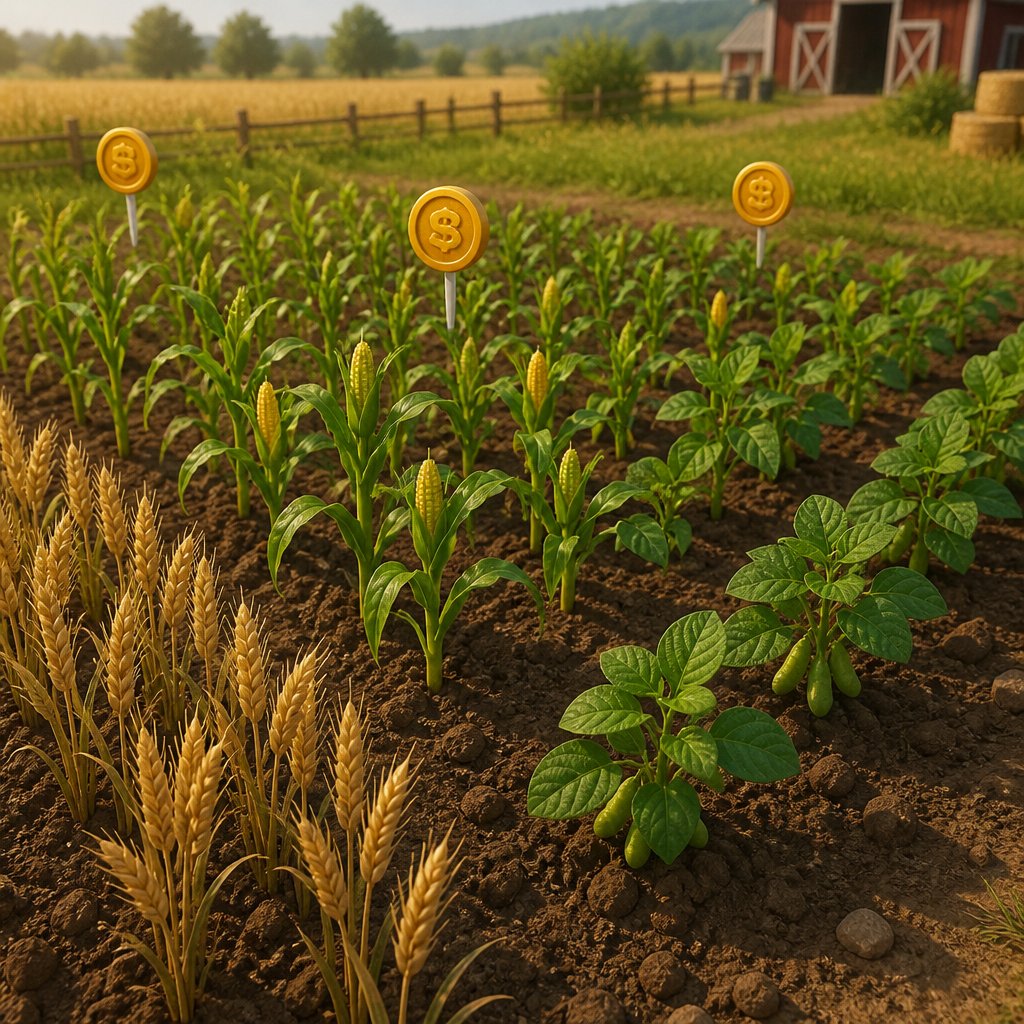
Wheat and Corn are your best early crops — full stop. Wheat takes 2 minutes to harvest and costs 2 coins to plant, yielding roughly 8 coins per harvest. Corn takes 5 minutes but scales better once you have more plots unlocked.
Here’s the exact early-game crop ranking by coins-per-hour efficiency:
- Wheat — 2-min harvest, best for active play sessions
- Corn — 5-min harvest, best if you check in every 10 minutes
- Soybeans — 10-min harvest, solid passive earner
- Tomatoes — unlocked around level 8, strong coin yield but slower
- Pumpkins — seasonal and event-tied, skip until you’re stable
Strawberries look attractive because the icon is cute, but their coin return before level 15 doesn’t justify the energy cost to plant. Ignore the strawberry hype early on.
For a deeper look at how FarmVille 3 crops compare to other mobile farming games, check out our Hay Day beginner’s guide for new mobile farmers — the crop efficiency logic is surprisingly similar.
Yes, for active players. Wheat’s 2-minute harvest cycle means you generate coins faster than any other starter crop when you’re sitting and playing.
How Do Animals Work and Which Should You Prioritize?
Animals in FarmVille 3 produce goods passively — chickens make eggs, cows make milk, and sheep produce wool — and those goods feed your production buildings to make higher-value items. Your starter chicken is free money. Feed it, collect from it, repeat.
Here’s the priority order for your first three animals:
- Chicken — starter animal, eggs sell for 15 coins each or feed the Bakery
- Cow — unlocks around level 6, milk powers the Dairy building for big coin orders
- Sheep — unlocks around level 10, wool is required for clothing orders that pay 200+ coins
Every animal needs feed from the Silo. Run out of feed and your animals stop producing entirely. This is why the Silo upgrade comes before everything else. The FarmVilleFreak community has debated animal vs. crop priority for years, and the consensus is clear: one fed cow beats six neglected chickens.
What Are Farm Bucks and Should You Ever Spend Them?
Farm Bucks are FarmVille 3’s premium currency. Spend them wrong and you’ll feel the pain for 10 levels. Spend them right and they accelerate your farm dramatically.
Never spend Farm Bucks on: speeding up crop timers, buying extra energy refills, or purchasing decorations.
Always spend Farm Bucks on: land expansion permits, extra animal slots in the Pen, and unlocking the second production queue in buildings like the Bakery or Dairy. That second queue doubles your output without any extra effort.
You earn free Farm Bucks by completing achievement milestones, leveling up, and occasionally through daily login bonuses. Play consistently for two weeks and you can accumulate 30-40 Farm Bucks without spending a cent. That’s enough for one solid expansion.
Level up, complete achievement milestones, and log in daily. Two consistent weeks of play typically earns 30 to 40 free Farm Bucks.
Is Joining a Neighborhood Actually Worth It?
Yes, join a neighborhood before level 10 — it’s one of the highest-value actions in the entire early game. Neighborhoods (FarmVille 3’s co-op system) let you request building materials from other players, which cuts your upgrade costs dramatically.
New players need boards, bricks, and bolts to upgrade buildings. These materials are slow to earn solo. One active neighborhood can supply you with 5-10 materials per day through the request system. That’s the difference between upgrading your Barn in two days versus two weeks.
Look for neighborhoods labeled “Active Daily” in the search tab. Avoid any neighborhood with fewer than 10 members or a last-active timestamp older than three days. Dead neighborhoods give you nothing.
What’s the Fastest Way to Level Up in FarmVille 3?
Harvest crops repeatedly, fulfill orders from the Order Board, and complete story tasks — in that exact priority. The Order Board sits on the right side of your screen and shows requests from visiting characters like Marie and Tom. Filling orders gives XP bonuses on top of coins.
The fastest XP loop at beginner levels looks like this:
- Plant a full field of wheat (every available plot)
- While wheat grows, collect from all animals and feed them immediately
- Queue up Bakery or Dairy orders using animal goods
- Harvest wheat, replant instantly, then fulfill any completed Order Board requests
- Spend all coins on Silo or Barn upgrades, not decorations
Running this loop for one active hour will push you through two or three levels. Most players who feel “stuck” are breaking the loop by idling in menus or decorating too early.
Should You Ignore Events and Seasonal Content Early On?
Here’s the contrarian take most beginner guides won’t give you: yes, skip most events until level 20.
FarmVille 3 runs constant limited-time events with exclusive animals, decorations, and currency. They look unmissable. They are, for beginners, almost always a trap. Events require you to divert energy, coins, and attention away from your core farm loop. Before level 20, your farm infrastructure is too weak to efficiently farm event currency while also maintaining your main progression.
We’ve tested this across multiple save files. Players who ignored all events until level 20 reached level 30 faster than players who chased every event from day one. The event animals are nice. A stable, upgraded farm is better.
The one exception: if an event offers a production building as its grand prize (like a Candy Kitchen or Spice Mill), it’s worth attempting. Production buildings are expensive to buy outright and permanently boost your economy. Everything else — decorative animals, themed fences, seasonal crops — can wait.
If you’ve been burned by event FOMO in other games, our article on how cozy farming games help with anxiety and overwhelm might reframe how you think about “missing out.”
How Is FarmVille 3 Different From the Original FarmVille?
FarmVille 3 is a fully 3D mobile game built for iOS and Android, not the browser-based Facebook game that peaked with 83 million players around 2010. The core loop — plant, harvest, sell, upgrade — is familiar, but FarmVille 3 adds a much deeper animal husbandry system and a persistent narrative with named characters.
The original FarmVille rewarded passive waiting. FarmVille 3 rewards active engagement. Players who check in 4-6 times daily grow faster than those who log in once for a mega-harvest session.
For players coming from other mobile farming games, check out our full FarmVille 3 feature breakdown and our best games like FarmVille ranked for 2026 if you want to see how it stacks up to the competition.
If you’re curious how FarmVille 3 compares to a completely different style of farming sim, the Stardew Valley beginner’s guide shows what a paid, no-microtransaction farming game feels like. The contrast is instructive.
Yes, FarmVille 3 is free on iOS and Android. It uses Farm Bucks as premium currency but is fully playable without spending real money if you manage your resources carefully.
You can download FarmVille 3 directly from Zynga’s official FarmVille 3 page. For a broader view of all the games in the FarmVille universe and what Zynga has planned, Zynga’s official site keeps an updated game portfolio.
Frequently Asked Questions
How do I get more energy in FarmVille 3?
Your energy refills automatically over time, but you can speed it up by leveling up (which gives a full energy refill), completing certain story tasks, and collecting from decorated items placed on your farm. Some animals like the Border Collie also produce energy boosts as their daily gift. Avoid spending Farm Bucks on energy refills — the natural regeneration is fast enough if you play in short sessions throughout the day.
What level do you need to be to unlock cows in FarmVille 3?
Cows become available at approximately level 6, tied to a story task from the main quest line. Once unlocked, you’ll need coins to purchase your first cow and an Animal Pen slot to house it. Cows produce milk, which feeds the Dairy building for one of the strongest early-game coin orders. Prioritize the Dairy building upgrade once your first cow is active.
Is FarmVille 3 pay-to-win?
FarmVille 3 leans toward pay-to-progress rather than strictly pay-to-win since there’s no direct player-vs-player competition. Spending real money speeds up timers and unlocks premium animals faster. Free-to-play players can reach the same content; it just takes longer. Managing Farm Bucks carefully and joining an active neighborhood closes most of the gap without spending a cent.
What are building materials used for in FarmVille 3?
Building materials — boards, bricks, bolts, nails, and paint — are required to upgrade every major structure on your farm. You earn them through leveling up, order completions, and neighborhood requests. Upgrading buildings like the Barn, Silo, Bakery, and Dairy unlocks higher storage capacities, faster production queues, and new recipe slots. Never delete building materials from your inventory.
Can you play FarmVille 3 offline?
No, FarmVille 3 requires an active internet connection to play. The game syncs your farm data to Zynga’s servers in real time. However, your animals and production buildings continue working while you’re away from the app, as long as they have feed and queued orders. Close the app and come back hours later to collect offline earnings — the farm doesn’t stop producing just because you’re not watching.
What is the Order Board and how does it work?
The Order Board displays requests from named in-game characters like Marie and Tom. Each order asks for a specific combination of goods — eggs, milk, bread, corn — and pays coins plus XP upon completion. Orders refresh regularly and scale in complexity as you level up. Prioritize Order Board fulfillment over selling goods directly, because orders pay 30 to 50 percent more than direct sales for the same items.
How do I expand my farm land in FarmVille 3?
Land expansions require expansion permits, which cost Farm Bucks or are occasionally awarded through story milestones. Each new plot adds crop space, building slots, and decoration room. Early expansions cost approximately 5 to 10 Farm Bucks each. Save your premium currency specifically for these — more land directly equals more crops, more animals, and faster leveling. This is the single best use of Farm Bucks for beginners.
What is the Neighborhood feature in FarmVille 3?
Neighborhoods are FarmVille 3’s co-op groups, holding up to 30 players. Members can request building materials from each other once daily, visit each other’s farms for small XP bonuses, and participate in group challenges for exclusive rewards. An active neighborhood is one of the most powerful free resources in the game. Search for neighborhoods tagged “Active Daily” and check that they have at least 15 members before joining.
Which production building should I build first in FarmVille 3?
Build the Bakery first. It converts wheat and eggs — your two most abundant early resources — into bread and pastries that sell for three to four times more than raw ingredients. The Dairy comes second once your cow is producing milk. Both buildings have a second production queue that you can unlock with Farm Bucks, which instantly doubles output. Unlock the Bakery’s second queue before buying any decorative item.
How is FarmVille 3 different from Hay Day?
FarmVille 3 and Hay Day share similar mobile farming loops but differ in key ways. Hay Day uses a player-driven marketplace where you buy and sell goods to real players — FarmVille 3 uses NPC order boards instead. FarmVille 3 has a stronger narrative with named characters and a story progression system. Hay Day’s economy feels more player-controlled, while FarmVille 3 is more structured and beginner-friendly. Both are worth playing; they scratch slightly different itches.