
FarmVille 2 Country Escape Best Crops: Ranked by Real Profit

You just planted six plots of Orchids because they looked valuable, watched them sit untouched for eight hours, then realized you’ve blocked every plot you needed for the Corn feeding your Ducks, whose products are the only thing three of your pending Farm Orders actually want. After tracking crop efficiency across multiple levels and order types, I can tell you the most expensive-looking crop in FarmVille 2 Country Escape is almost never the most profitable one at your stage of the game.
Here’s the honest ranking by what actually matters — coins per hour of real-world time, not just raw sell price.
- Wheat (1-minute harvest) and Corn (10-minute harvest) are non-negotiable at every level — they feed animals
- Strawberries (30 minutes, ~18 coins raw) are the best mid-game crop for direct orders and coin value
- Tomatoes (1 hour) are essential from Level 25 onward due to constant Ketchup and Salsa order demand
- Orchids, Pears, and Red Grapes pay well but shouldn’t be planted before Level 35 — they block essential plots
- The Farm Stand consistently gets you more per crop than the Farm Orders board — use it for surplus
You Might Also Love These Ideas


Why Coins Per Hour Beats Raw Sell Price as a Ranking Metric
Almost every crop ranking guide for Country Escape lists crops by their raw sell price and calls it done. That metric tells you almost nothing useful because it ignores the two things that actually determine profitability: how long a crop ties up your plot, and whether it feeds into your current active orders.
No — a crop selling for 100 coins on a 12-hour timer earns roughly 8 coins per hour, while Strawberries at 18 coins on a 30-minute timer earn 36 coins per hour, more than four times the effective rate.
A crop sitting in your silo after harvest earns nothing. A crop that directly fulfills a current Farm Order earns its sell value plus order XP and coin bonuses simultaneously, effectively doubling its real value compared to selling it raw. The ranking below weights both of these factors.
Tier 1 — Plant These at Every Level, No Exceptions
Wheat harvests in 1 minute, costs 1 coin per plot, and feeds Chickens, Cows, Pigs, and Sheep. It earns almost nothing sold raw, and that’s fine — its value isn’t as a sell item, it’s as the fuel keeping your animal production running. An empty animal building earns zero coins. A fully fed animal building earns hundreds per session. Every plot you waste on a crop that isn’t Wheat or Corn is a plot that eventually starves an animal production line and backs up your orders.
Corn harvests in 10 minutes and feeds Ducks and Goats. Its raw sell price is similarly modest, but Duck Eggs and Goat Milk appear constantly in orders from around Level 15 onward, making Corn an essential production input rather than a crop to evaluate on sell price alone.

Tier 2 — Best Direct Profit Crops by Level Range
Strawberries — Level 5, 30-minute harvest, roughly 18 coins each sold raw. At approximately 36 coins per hour effective rate, Strawberries outperform most crops unlocked significantly later. They feed into Strawberry Jam and appear directly in Farm Orders from early on, meaning they rarely sit idle in your silo waiting for demand. This is the crop the FarmVilleFreak community has identified as the strongest mid-game direct seller, and the data backs it up. If you have free plot space after covering Wheat and Corn, Strawberries fill it.
Tomatoes — around Level 10, 1-hour harvest, moderate raw value. On a per-hour basis they don’t match Strawberries, but Tomatoes become essentially mandatory from Level 25 onward because Ketchup and Salsa both require them, and both show up in Farm Orders so frequently that running low on Tomatoes actively stalls your order completion rate regardless of what else your farm produces.
Tier 3 — Situational Crops Worth Understanding
Carrots — fast harvest, low sell value, but appear in early orders constantly and are worth planting during active play sessions when you can harvest quickly between taps. Not efficient for offline planting.
Peppers — moderate harvest time, appear in mid-game orders regularly, and feed into Hot Sauce crafting. Underrated by players who overlook crafting output in favor of raw crop sales.
Blueberries — solid coin value, appear in a variety of mid-level orders, and have a fast enough harvest window to be practical for active sessions. Worth rotating in once your Wheat and Corn supply is consistently covered.
When Should You Actually Plant High-Tier Crops Like Orchids?
Most new players see Orchids (8-hour harvest, Greenhouse required) and assume “expensive unlock = best crop.” I think that assumption is one of the most reliably expensive mistakes in the entire game, and here’s the specific reasoning behind it.
Orchids need a dedicated Greenhouse building to produce, take 8 hours per harvest, and require you to already have stable Wheat and Corn production running continuously to keep your animals producing simultaneously. Planting Orchids before Level 35, before your animal production is automated and before your barn has enough space to hold everything without backing up, means you’re locking up 8 hours of plot space for a single crop while your faster-cycling order fulfillment grinds to a halt waiting on animal products your unfed animals aren’t producing.
Wait until your coin income from Strawberries, Tomatoes, and animal products is consistently clearing your daily Farm Orders without you actively managing every plot, then layer in Orchids as an additional income stream. As a first crop or a Level 20 experiment, they reliably underperform compared to what those same plots would produce running Strawberries instead.
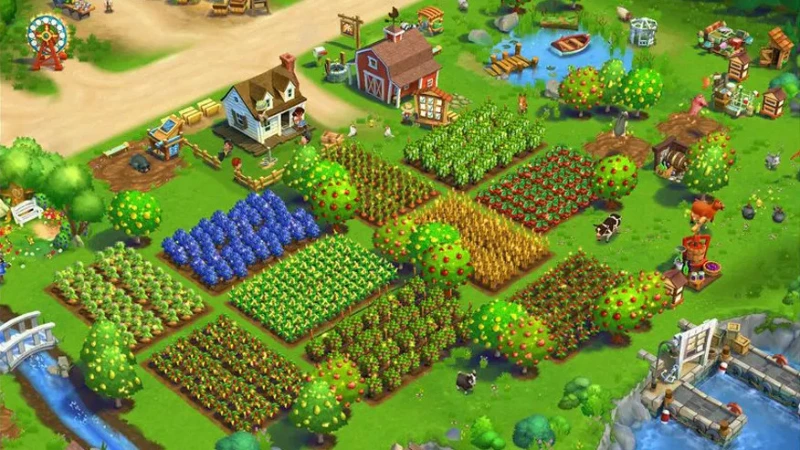
What About Lemons, Pears, and Red Grapes?
These later-game crops share the same fundamental problem as Orchids — long harvest timers locking up plots, and relatively narrow order demand compared to the evergreen appetite for Strawberries and Tomatoes. They do have genuine value, specifically as Global Market trading commodities: Lemons, Pears, and Red Grapes are all identified in the late-game community as items worth buying from the Global Market when other players list them cheaply, since they’re hard to farm efficiently at lower levels but appear regularly in high-value late orders.
Often yes, especially in the mid-game — if other players are selling them below their order value, buying and immediately filling that order generates profit without locking up any of your own plot space.
Our FarmVille 2 Country Escape complete guide covers how the Global Market fits into a broader trading and order strategy once your farm is past the early leveling phase.
Farm Stand vs Farm Orders Board — Where to Sell Your Surplus
The Farm Stand consistently gets you more per crop than selling directly through the Farm Orders board, because you’re selling to other players at competitive market rates rather than at the fixed (and usually lower) board prices. The trade-off is that Farm Stand sales aren’t immediate — your items sit listed until another player buys them.
The practical approach: fulfill active Farm Orders first using crops you’ve specifically grown for those orders, then route any surplus into the Farm Stand rather than the board. Items with high time value — anything taking more than 15 minutes to grow — are the most worth listing at Farm Stand because other players needing one more unit to complete their own orders will pay close to your asking price rather than wait to grow it themselves. For short-grow staples like Carrots, the board is often fine since the price difference per unit is small and you want to move inventory quickly.
- ☐ Always maintain Wheat and Corn — animal production depends entirely on them
- ☐ Fill remaining plots with Strawberries — best coins-per-hour for mid-game
- ☐ Add Tomatoes from Level 25 onward — Ketchup and Salsa order demand is constant
- ☐ Don’t plant Orchids or Pears before Level 35 — they stall faster-cycling income
- ☐ Buy Lemons, Pears, Red Grapes from the Global Market rather than growing them early
- ☐ Sell surplus at the Farm Stand, not the Farm Orders board, for better coin returns
- ☐ Plant short-harvest crops (Carrots, Berries) during active sessions, long ones before going offline
Frequently Asked Questions
What is the best crop in FarmVille 2 Country Escape?
Wheat and Corn are the most essential crops at every level since they directly feed your animals. For direct coin profit, Strawberries offer the best effective coins-per-hour rate for mid-game players, harvesting in 30 minutes and selling for roughly 18 coins each while appearing constantly in Farm Orders.
When should you plant Orchids in FarmVille 2 Country Escape?
Not before Level 35. Orchids require a dedicated Greenhouse building and take 8 hours per harvest, blocking plot space you need for faster-cycling crops that feed your animals and fulfill daily orders. Once your animal production runs consistently without manual management, Orchids become a worthwhile additional income layer.
Is the Farm Stand or Farm Orders board better for selling crops?
The Farm Stand consistently gets higher prices per crop since you’re selling to other players at competitive market rates rather than the fixed, often lower prices on the Farm Orders board. The trade-off is that Farm Stand sales aren’t immediate — items stay listed until another player purchases them.
Why are Wheat and Corn so important even though they sell for almost nothing?
Their value isn’t in raw sell price — it’s in keeping your animals producing. Wheat feeds Chickens, Cows, Pigs, and Sheep; Corn feeds Ducks and Goats. An unfed animal produces nothing, and animal products like Eggs, Milk, and Wool appear in Farm Orders far more frequently than most raw crops do.
What crops should you plant before going offline overnight?
Long-harvest crops like Orchids (8 hours), Pears, or Red Grapes are best suited for offline overnight planting, since you won’t be tapping to replant during those hours anyway. Avoid planting Wheat or Carrots overnight — they’ll be ready to harvest in minutes and then sit idle until you return.
Should you buy Lemons and Pears from the Global Market?
Often yes, especially in mid-game. If other players are selling them below their Farm Order value, buying and immediately filling that order generates profit without locking up any of your own plot space on an inefficient long-timer crop.
When do Tomatoes become essential?
From around Level 25 onward. Tomatoes feed into Ketchup and Salsa crafting, and both appear so frequently in Farm Orders from this point that consistently running low on Tomatoes actively stalls your order completion rate regardless of how efficiently everything else on your farm is running.
What is the maximum number of crop plots you can have?
You can have a maximum of 6 plots of each crop type. Additional farm plots beyond your starting two can be unlocked with Keys — the third costs 5 Keys, rising steeply afterward, making early Key spending on plots a reasonable investment for high-value crops like Strawberries.
Do mastered crops earn more in FarmVille 2 Country Escape?
Yes — mastered crops have a 10 to 40% chance of earning bonus experience points per harvest plot, increasing their effective XP return without any additional time investment, which makes farming high-frequency crops like Wheat and Strawberries toward mastery a worthwhile long-term habit.
Are Blueberries worth planting in FarmVille 2 Country Escape?
Yes, once your Wheat and Corn supply is consistently covered. Blueberries have a fast enough harvest window to be practical for active play sessions, appear in a variety of mid-level orders, and offer solid coin value relative to their harvest time.
Crop harvest times and coin values cross-referenced from the FarmVille 2: Country Escape Wiki and current community strategy guides, updated for 2026.