Why FarmVille Shut Down: The Real 2020 Story

Why FarmVille Shut Down: The Real Story Behind the December 2020 Closure
You logged in one day and it was just gone. No dramatic finale, no farewell harvest — just a game that shaped a decade of social media suddenly deleted from existence. If you’re still looking for a real explanation, not just “Flash died,” you deserve one.
- Adobe Flash Player reached end-of-life on December 31, 2020, forcing the shutdown.
- Zynga chose not to rebuild FarmVille in HTML5 — the cost wasn’t worth it.
- FarmVille’s player numbers had already collapsed from 83 million (2012) to a fraction by 2020.
- Mobile gaming had already replaced browser games years before the shutdown.
- FarmVille 2: Country Escape survived because it was built for mobile from the start.
What Actually Caused FarmVille to Shut Down?
Adobe Flash Player’s permanent end-of-life on December 31, 2020 is the direct cause. FarmVille was built entirely on Flash, and Adobe stopped all support — including security patches — meaning browsers blocked it completely. Zynga announced the shutdown in September 2020, giving players roughly three months’ notice.
This wasn’t a surprise to anyone inside the industry. Adobe had announced Flash’s retirement back in 2017, giving developers three full years to migrate their products. Zynga made a calculated decision: rebuilding FarmVille in HTML5 was expensive, and the return on investment simply wasn’t there anymore. The original FarmVille on Facebook had already become a shadow of itself.
You Might Also Love These Ideas


Both. Flash’s death forced a decision. Zynga actively chose not to rebuild the game, making the shutdown permanent rather than a temporary migration.
How Many Players Did FarmVille Have When It Closed?
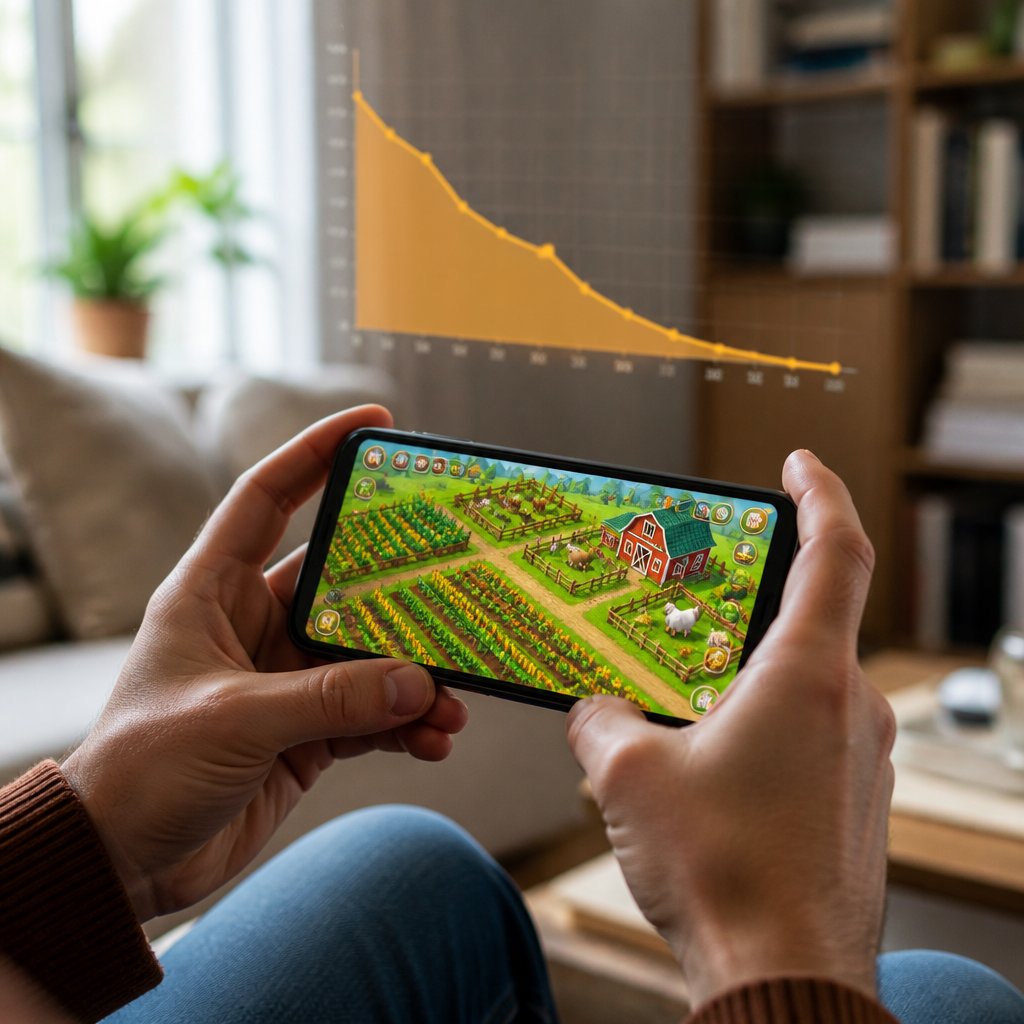
At its absolute peak in 2012, FarmVille hit approximately 83 million monthly active players — making it larger than most countries’ populations. By the time the shutdown was announced in late 2020, that number had collapsed dramatically, likely into the low millions or fewer for the Facebook browser version specifically.
The FarmVilleFreak community has tracked this decline for years. We watched the daily active user numbers erode season by season as players migrated to mobile games. The Facebook browser game ecosystem as a whole collapsed between 2013 and 2016. FarmVille was slow-walking toward this ending long before Adobe made it official.
Zynga’s own stock tells the story. The company peaked around $14 per share in March 2012, then crashed below $3 by late 2012 as player counts dropped and the mobile transition proved brutally difficult. FarmVille was the centerpiece of an era that had already ended.
Why Didn’t Zynga Just Rebuild FarmVille in HTML5?
Rebuilding FarmVille from scratch in HTML5 would have cost millions of dollars in development time for a game generating a fraction of its former revenue. The math was brutal and simple.
Think about what a full HTML5 rebuild actually means: every asset redrawn or converted, every game mechanic rewritten, years of accumulated code rearchitected, then re-tested for the Facebook platform. Meanwhile, Zynga already had FarmVille 3 in development for mobile — a brand-new game built on modern engines that didn’t carry a decade of technical debt. Why pour resources into a legacy product when the future of the franchise was already underway?
Other Flash games made this calculation too. Most chose what Zynga chose: walk away. A handful of beloved browser games did rebuild in HTML5 and survive. FarmVille was too large and too monetized around its specific Flash architecture to make that transition cheaply.
Legally, no — Zynga owns all FarmVille intellectual property. Several fan projects have attempted spiritual successors, but nothing that replicates the original game exists officially.
Was FarmVille Already Dying Before the Shutdown?
Yes — and this is the part of the story most people skip. FarmVille was in a years-long decline before Flash ever became an issue. The game had lost the majority of its audience by 2015.
The reason is mobile. When smartphones became the dominant gaming platform between 2011 and 2014, Facebook browser games lost their captive audience almost overnight. Games like Clash of Clans, Candy Crush Saga, and eventually titles like Hay Day — which brought the farming genre to mobile brilliantly — pulled players away permanently.
Facebook itself made things worse. In 2012, Facebook dramatically reduced how often games could send notifications and feed posts to friends. Those viral sharing loops — the “I need 3 more neighbors to expand my farm” requests — were the entire growth engine of FarmVille. When Facebook killed spam-style notifications, it killed the game’s organic reach. New players stopped discovering FarmVille, and without new players, virtual economies stagnate.
By 2020, the people still playing FarmVille on Facebook were loyal veterans. They deserved a better sendoff than they got.
Here’s the Contrarian Take: Flash Didn’t Kill FarmVille — We Did
Every obituary for FarmVille blames Adobe Flash. That’s too easy, and it lets everyone off the hook.
FarmVille’s real killer was social fatigue. In 2009 and 2010, asking your friends to click a link so you could get a free cow was novel and fun. By 2013, it was universally mocked. The cultural moment that made FarmVille possible — a Facebook feed you actually checked, a social graph that felt intimate, a novelty-hungry public discovering casual games for the first time — evaporated. Flash was just the mechanism for turning off the lights. The party had been over for years.
Zynga recognized this and pivoted aggressively to mobile starting in 2012, spending over $200 million acquiring mobile game studios. Most of those bets failed. But the pivot itself was correct. If FarmVille had been a mobile-first game from the beginning, it would still exist today in some form — just like the farming games that survived by going mobile early.
The lesson isn’t “don’t build on Flash.” The lesson is: when your game’s growth engine is a social platform’s notification system, you’re one algorithm change away from irrelevance.
What Happened to FarmVille Players’ Progress and Purchases?
Everything was lost. Farm layouts, decorations, animals, rare limited-edition items, years of progress — all of it disappeared when the servers went dark on December 31, 2020.
Zynga stopped selling in-game currency (Farm Cash) for the original FarmVille in September 2020 when they announced the closure. Players who had unused Farm Cash or FarmVille Cash at the time of shutdown were not compensated with real money or transferable credits. This upset a lot of the remaining community, and rightfully so.
The FarmVilleFreak community spent months before the shutdown documenting farms, sharing screenshots, and organizing farewell events. If you were part of that — you made the right call. Those screenshots are the only record that remains.
No. Zynga stopped new purchases in September 2020 but did not refund previously spent real money. This was consistent with standard terms of service for online games.
Which FarmVille Games Still Exist in 2026?
The original FarmVille on Facebook is gone permanently. Two other games in the franchise survived and are still active.
FarmVille 2: Country Escape launched in 2014 as a mobile-first game and remains available on iOS and Android. It was never built on Flash, so the 2020 shutdown didn’t touch it. FarmVille 3 launched in 2021, just months after the original closed — and our FarmVille 3 beginner’s guide will get you started if you haven’t tried it yet. Both games have active player bases, regular seasonal updates, and in-game events.
If you want the closest experience to the original FarmVille’s social, browser-based charm, honestly look at games like Stardew Valley and the farming games that followed in its footsteps. The cozy farming genre didn’t die with FarmVille — it evolved into something richer.
How Should FarmVille Players Remember the Game?
FarmVille was genuinely important. Not just as a game, but as a cultural moment that introduced over 80 million people to casual gaming who had never identified as gamers before. Grandmothers, college students, office workers — FarmVille made everyone a farmer for a few years, and there’s nothing embarrassing about that.
After hundreds of hours covering this community since 2009, the thing that stands out isn’t the crops or the mechanics — it’s the people. Neighbors who became real friends. Players who used farming together as a way to stay connected across distances. The game was a backdrop for genuine human connection, and that part doesn’t disappear when the servers do.
If you’re still sad about it in 2026, that’s not weird. It’s appropriate. You lost something real. The grief makes sense. And if you’re ready to find that same feeling again, the new generation of cozy farming games is genuinely healing — built by people who grew up playing exactly what you loved.
No legitimate way exists. The servers are offline and Zynga has not released the game’s code. Any site claiming to offer the original FarmVille is not legitimate.
Frequently Asked Questions
Why did FarmVille shut down in 2020?
FarmVille shut down on December 31, 2020 because Adobe Flash Player reached its permanent end-of-life on that date. All major browsers blocked Flash content entirely. FarmVille was built on Flash and Zynga decided rebuilding the game in HTML5 wasn’t financially viable given the game’s already-declining player numbers. The shutdown had been announced in September 2020, giving players about three months’ notice.
How many people played FarmVille before it shut down?
FarmVille reached approximately 83 million monthly active players at its peak around 2012. By the time of its December 2020 shutdown, that number had dropped dramatically over the preceding eight years as players migrated to mobile games. The browser-based Facebook gaming ecosystem as a whole collapsed between 2013 and 2016, taking most of FarmVille’s audience with it long before the shutdown.
Can you still play FarmVille anywhere in 2026?
The original FarmVille on Facebook cannot be played anywhere legitimately in 2026. The servers are permanently offline. However, FarmVille 2: Country Escape is still available on iOS and Android, and FarmVille 3 launched in 2021 and remains active on mobile platforms. These are different games but carry the FarmVille brand and spirit forward.
Did Zynga give players any warning before FarmVille closed?
Yes. Zynga announced the shutdown in September 2020, approximately three months before the December 31, 2020 closure date. They stopped selling in-game Farm Cash currency at the time of the announcement. Many players used those final months to document their farms and say farewell to neighbors. The FarmVilleFreak community organized several memorial events during that period.
Did players get refunds when FarmVille closed?
No. Zynga did not issue refunds for real money previously spent on Farm Cash or in-game items. This was consistent with the game’s terms of service, which — like virtually all online games — explicitly state that virtual items and currency have no real-world monetary value and can be removed at any time. Zynga did stop new purchases in September 2020 to avoid taking new money before closure.
Why didn’t Zynga just convert FarmVille to HTML5?
The cost of converting FarmVille to HTML5 was prohibitive given its declining revenue. A full rebuild would have required recreating every game asset, rewriting the game’s core code, and retesting the entire experience — costing millions of dollars. With FarmVille’s active player numbers already severely reduced, that investment had no realistic return. Zynga chose to invest in FarmVille 3, a new mobile game, instead.
What killed FarmVille’s popularity before the shutdown?
Several factors combined. Mobile gaming exploded between 2011 and 2014, pulling players away from browser-based games permanently. Facebook changed its notification and feed algorithms in 2012, cutting off the viral sharing loops that drove FarmVille’s growth. Social fatigue with game request spam made FarmVille culturally unfashionable. By the time Flash became an issue, FarmVille had already lost the vast majority of its audience to these earlier forces.
Is FarmVille 2: Country Escape the same as FarmVille?
FarmVille 2: Country Escape shares the FarmVille brand and farming theme but is a distinct game with different mechanics, a separate map called Treetop Farm, and its own economy. It was built natively for mobile in 2014 and has no connection to the original Facebook game’s servers or progress. Players who loved the original often enjoy Country Escape, but it’s not a direct continuation — it’s a parallel franchise entry.
What games should former FarmVille players try now?
FarmVille 3 and FarmVille 2: Country Escape are the most direct successors. Beyond Zynga’s titles, Stardew Valley is the most acclaimed farming game ever made and captures the cozy, satisfying progression loop that made FarmVille compelling. Hay Day offers a strong social farming experience on mobile. For a social, life-sim angle closer to FarmVille’s Facebook roots, Animal Crossing: New Horizons is worth trying.
Will Zynga ever bring back the original FarmVille?
Zynga has made no announcement suggesting the original FarmVille will return. The game’s Flash-based architecture is obsolete, recreating it would require enormous investment, and Zynga now operates FarmVille 3 as the active flagship of the franchise. A nostalgia-driven remaster is theoretically possible — companies have revived older IP before — but there is no evidence this is planned as of 2026. The original game, as it existed, is gone.