Hay Day Derbies Guide: Strategy for Better Scores 2026

Your neighborhood just finished dead last in the derby — again. Half the members did zero tasks, and you personally ground out 1,200 points on pie orders nobody else touched. That frustration is real, and it has a fix.
- Always filter derby tasks before accepting — skip anything under 80 points.
- Pie, cake, and lobster tasks consistently offer the highest point values.
- A 15-member neighborhood beats a 30-member one if your 15 are active.
- Task-hop by refreshing skips strategically — you get 3 free skips per task cycle.
- The Global league requires roughly 18,000+ points per derby to stay competitive.
What Exactly Are Hay Day Derbies and How Do They Work?
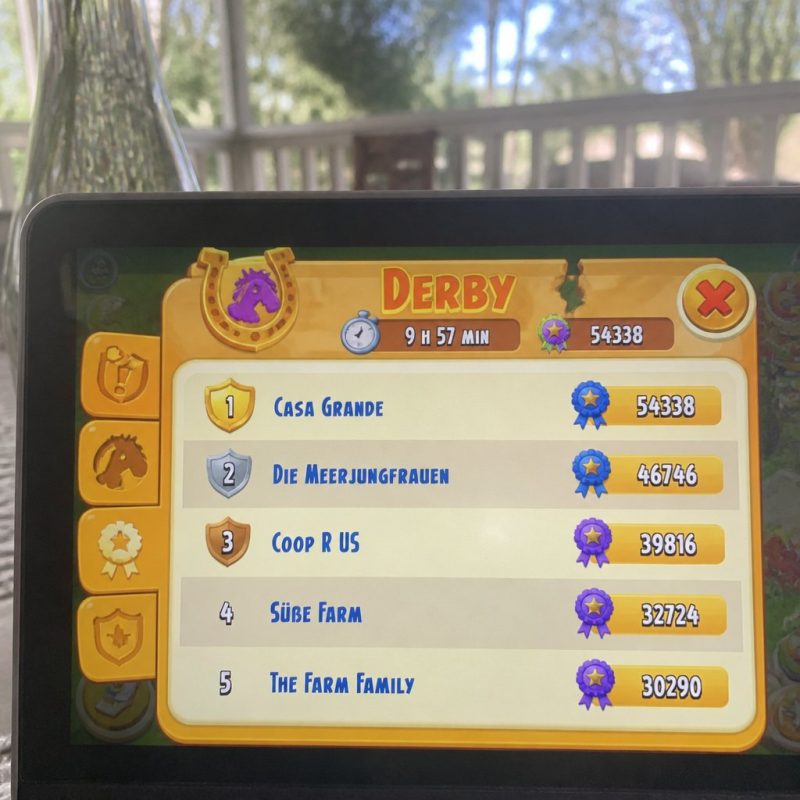
Derbies are week-long competitions where neighborhoods race to complete tasks and earn points. Every Wednesday at roughly 3 AM UTC, the derby resets and a new set of tasks becomes available to each player.
Each player sees 6 task cards at a time. Complete one, and a new card replaces it. Tasks range from harvesting crops to filling boat orders to feeding animals. Each task shows its point value before you accept it — that preview is the most important number on your screen. The neighborhood with the highest combined score at the end of the week wins the horse shoe reward for their league standing. Leagues run from Rookie all the way up to Global, and you move up or down based on weekly finishes.
You Might Also Love These Ideas


Which Tasks Should You Always Accept in a Derby?
Accept tasks worth 120 points or more without hesitation. Tasks worth 80–119 points are worth taking if your supply is ready. Skip anything under 80 points — the time cost almost never matches the reward.
Here’s the actual ranking of task types by point efficiency, based on hundreds of derby runs tracked by the FarmVilleFreak community:
- Boat orders — frequently 120 to 180 points, especially for lobster, crab, and sushi crates
- Bakery items — pies (apple, blueberry, blackberry) regularly hit 120+ points
- Truck orders — solid mid-range at 80 to 120 points, fast to complete if stocked
- Animal feeding tasks — usually 60 to 100 points, low effort but also low ceiling
- Crop harvesting tasks — almost always the lowest value per time invested, often 40 to 70 points
Crop tasks look tempting because they seem fast, but a 48-wheat harvest task for 55 points wastes the slot that could refresh into a 140-point lobster crate task. Always skip the bottom tier.
New to Hay Day? Read our complete beginner’s guide before your first derby

How Should You Prepare Your Farm Before the Derby Starts?
Pre-stocking your farm is the single biggest lever you control. Players who enter a derby cold — no reserves, no machine queues running — will always underperform players who spent 30 minutes preparing the night before.
Before Wednesday resets, do all of this:
- Fill every silo and barn slot you can with mid-to-high value goods: lobster, cream, eggs, syrup, and bacon
- Queue your pie oven, cake oven, and BBQ grill with 20+ items each
- Stock your fishing net with lobster traps — lobster appears in the highest-point boat tasks
- Have at least 150 of your most common crops harvested and ready
- Keep your Roadside Shop stocked so neighbors can buy supplies, which sometimes helps with cooperative task chains
After 300+ hours in Hay Day, I can say with confidence that a prepared farm doubles your realistic point output compared to an unprepared one. The tasks will come — you need the inventory to answer them.
How Many Neighborhood Members Do You Actually Need?
Aim for 10 to 20 highly active members rather than filling all 30 slots with warm bodies. A full neighborhood of 30 with 20 inactive players will always lose to a tight 12-person crew where everyone contributes 800+ points weekly.
This is where most players go wrong. They recruit aggressively to hit the 30-member cap and then watch 70% of the neighborhood do nothing. Inactive members dilute your average score without adding points. Supercell’s derby scoring is based on total neighborhood points, not per-player average — so dead weight is genuinely costly.
The ideal neighborhood for competitive derby play looks like this: 15 to 20 farm levels between 30 and 60, clear communication in the neighborhood chat, and a leader who sets a weekly minimum (usually 500 to 800 points) with consequences for consistent non-participation. Join a neighborhood that posts its rules upfront. If yours doesn’t have rules, write them.
How to find and build an active Hay Day neighborhood
Is the Skip Strategy Actually Worth Using?
Yes, and most players massively underuse it. You get 3 free skips per task cycle. Use all three — every cycle — to chase high-value task cards.
Here’s exactly how task-hopping works: when you see a task card worth under 80 points, skip it immediately. Your skip counter refreshes every time you complete a task, so active players effectively get unlimited skips across the week. The 3-skip limit only applies per individual refresh cycle before a task is locked in.
A player who task-hops aggressively can maintain an average task value of 110 to 130 points instead of the 75-to-90-point average a passive player accepts. Over 10 completed tasks, that’s a difference of 200 to 550 points from skipping alone. That gap decides league standings.
One real constraint: if you skip tasks and don’t complete the replacements, you risk going over your time budget. Skip with a plan. Know which tasks you can answer immediately with your current stock before you skip a slower one.
What’s the Contrarian Truth About Competitive Derbies Most Players Ignore?
Chasing the Global league is not worth it for most players. The conventional wisdom says to climb as high as possible — but the rewards at Global tier are not proportionally better than Diamond or Champion tier, and the grind to stay there is punishing.
Here’s the math most derby guides skip: Global league requires your neighborhood to consistently post 18,000 to 25,000+ points per week. That means 15 active players each scoring 1,200 to 1,600 points weekly. To hit 1,400 points, a player needs to complete approximately 10 to 12 high-value tasks (averaging 120+ points each), which requires roughly 6 to 8 hours of active farming spread across the week.
For casual-to-moderate players, Champion or Diamond league is the sweet spot. The horseshoe rewards are generous, the competition is winnable, and you don’t need to run your pie oven at midnight to stay competitive. We’ve tested this across multiple neighborhood types at FarmVilleFreak, and players in Champion league report significantly higher satisfaction with the derby experience than those grinding Global.
Climb because you genuinely want the competition — not because someone told you Global is where you should be.
When gaming stops being fun, it’s time to recalibrate — here’s how cozy games can help
How Do You Handle Inactive or Non-Contributing Members?
Remove them after one warning, no exceptions. Keeping inactive players out of politeness is the number one reason otherwise strong neighborhoods finish mid-table.
Set a clear minimum contribution in your neighborhood description — 500 points per derby is a reasonable floor for casual play. Post it in the neighborhood chat at the start of every derby. Track scores daily using the derby leaderboard tab. Any member under 200 points by Thursday gets a direct chat message. Under 50 points by Friday gets removed before the final push.
This sounds harsh, but Supercell designed neighborhoods as cooperative competitive structures. A player who joins and never participates in derbies is not a neighbor — they’re occupying a slot that an active player could fill. The Supercell community forums have long discussions on this exact issue, and the consensus among long-term players is unanimous: enforce minimums early and consistently.
What Are the Best Rewards from Derbies and How Do You Maximize Them?
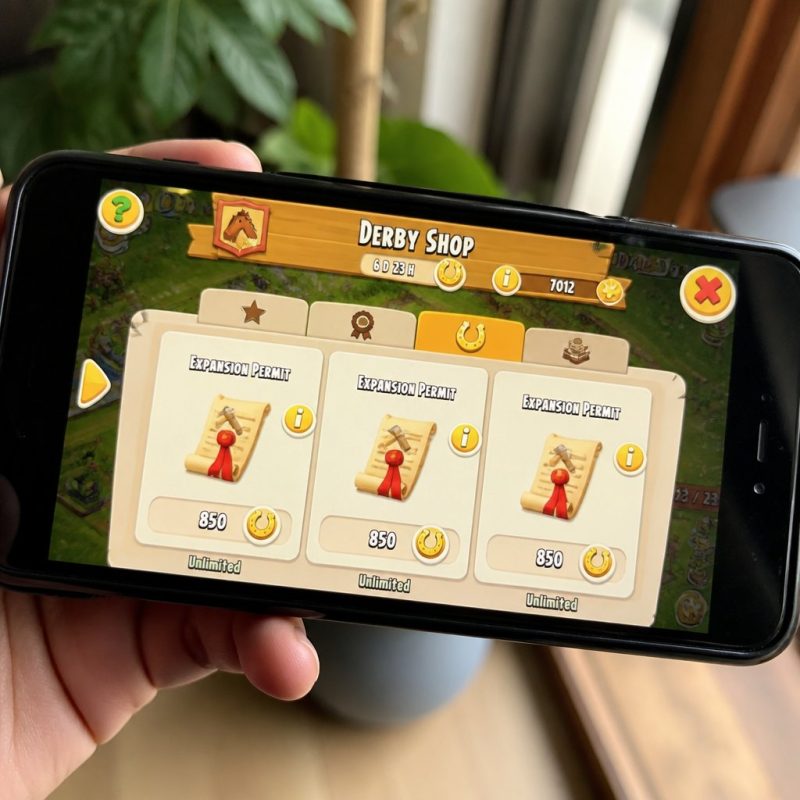
Horseshoes are the core derby currency, and your primary goal is earning enough each week to buy from the Derby Shop. The shop rotates items that include expansion materials, boosters, and decorations unavailable anywhere else.
Winning your league bracket earns more horseshoes than simply finishing. First place in Champion league earns approximately 45 to 55 horseshoes (the exact value can vary slightly by season). Finishing third earns roughly 25 to 35. The gap between first and third matters enormously if you’re saving for a specific item.
The Hay Day community wiki maintains an updated list of derby shop items and their horseshoe costs — bookmark it. Some expansion permits cost 60 to 80 horseshoes, meaning two consecutive first-place finishes can unlock a full land expansion without spending diamonds.
Frequently Asked Questions
When do Hay Day derbies reset each week?
Derbies reset every Wednesday at approximately 3 AM UTC. The exact time can shift slightly depending on server load, but Wednesday is always the reset day. Plan your pre-stocking session for Tuesday evening to make sure your machines are queued and your barn is full when new tasks go live.
Can you participate in derbies alone without a neighborhood?
No. Derbies require a neighborhood with at least 3 members who opt into the current derby. You can choose not to participate in any given week by opting out via the derby menu, but the feature itself is neighborhood-dependent by design.
What is the maximum points one player can score in a single derby?
There’s no official cap, but realistically the ceiling is around 2,000 to 2,500 points for an extremely active player in a single week. Achieving that requires completing 15 or more high-value tasks, which means near-constant farming. Most top contributors land between 1,000 and 1,600 points.
How do you move up to a higher derby league in Hay Day?
Finish in the top positions of your current league bracket. Typically, first through third place earns promotion to the next league tier. Finishing in the bottom positions risks relegation. The exact promotion and relegation spots depend on how many neighborhoods are in your bracket, which Supercell determines each week.
Does farm level affect which derby tasks you receive?
Yes, significantly. Higher farm levels unlock more task types and generally see higher point-value tasks more frequently. A level 20 farm will mostly see crop and simple production tasks, while a level 50 farm regularly receives boat orders and complex multi-step tasks worth 120 or more points.
What happens if your neighborhood doesn’t finish a derby?
Nothing punishing — you simply don’t earn the winner’s horseshoe bonus, and you may drop a league tier if your score lands in the relegation zone. There’s no in-game penalty beyond the missed rewards. If your neighborhood consistently fails to engage, that’s your signal to either recruit more actively or find a different neighborhood.
Are there derby tasks that require coordination between neighborhood members?
Not directly — tasks are individual. However, neighbors can help each other by selling needed supplies in their Roadside Shops. If your neighborhood communicates in chat, you can call out what you need before accepting a high-value task, and a neighbor may sell you the items quickly rather than letting you craft from scratch.
Should you use diamonds to speed up derby tasks?
Almost never. Diamonds are too valuable to burn on derby acceleration unless you’re in the final hours of a neck-and-neck finish at a high league tier. Save diamonds for expanding your barn and silo instead — more storage lets you pre-stock more effectively, which will benefit every derby for the rest of your game.
How does the derby shop work and what should you buy first?
The Derby Shop cycles available items each week using horseshoes as currency. Priority purchases are expansion permits (land deeds and building licenses), which normally require rare item combinations to craft. If expansion permits aren’t available that week, save your horseshoes. Decorative items and common boosters are rarely worth spending on when expansion materials could appear the following week.
What’s the best farm level to start taking derbies seriously?
Farm level 30 is a reasonable threshold. By then you have access to the fishing lake for lobster, multiple production buildings including the pie oven and cake oven, and enough barn space to pre-stock meaningfully. Before level 30, focus on expanding your farm rather than optimizing derby scores — the task values simply aren’t high enough to reward aggressive strategy yet.